

Indeed analytics redesign
I led a project to design a new data and analytics experience for Talent Acquisition Managers and their teams
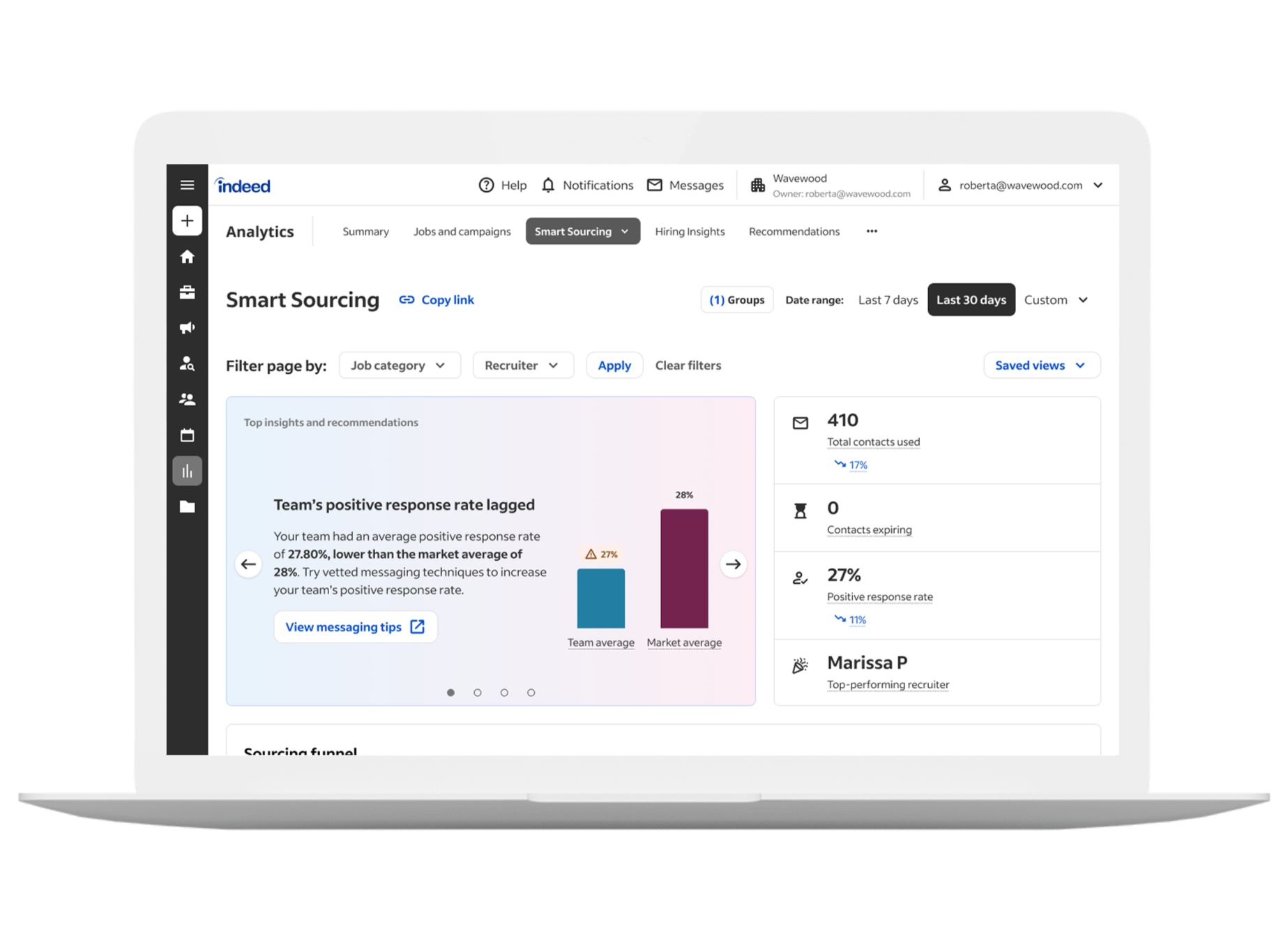
Challenge
Design a new analytics experience for Talent Acquisition managers and internal customer service reps to quickly and easily assess sourcing performance
Services
Ideation and vision development
Research synthesis
Wireframing and prototyping
User testing
Engineering collaboration
Deliverables
Annotated, usability-tested, WCAG-compliant, mobile responsive mockups to engineering
Outcomes
Engagement metrics increased 60 to 100% weekly
Strong positive feedback 3 to 1 positive to negative thumbs up/down and high satisfaction score improvement
Based on overwhelmingly positive user sentiment and engagement, the product was elevated from a free offering to a component of the Professional subscription monetization strategy.
The initiative's success resonated widely across the company, resulting in spontaneous recognition and positive feedback from multiple departments. “I love it, all my clients have said they love it”
The problem space
Indeed introduced Smart Sourcing (a new recruitment tool), but did not have a simple way for talent acquisition managers and internal customer service reps to assess their recruiting performance without having to download all the data and analyze it manually.
Users had to scour through rows of recruiter email addresses and raw metrics to ascertain performance. There was no comprehensive way to assess how recruiters were doing in the existing experience at an aggregate or individual level. Many employers were not even aware that Indeed had analytics and were managing them externally through spreadsheets or other methods.
Without having clear signals or direction, talent acquisition managers weren’t able to make accurate purchasing decisions or support their team.
How might we enable employers to understand and act on their teams’ recruiting performance?
Understanding pain points
In order to understand user pain points, we interviewed both internal and external users. This is what we found:
Users consistently rated the previous experience as below average, citing difficulty in navigation, finding relevant information, and the need for extensive manual work (exporting and filtering).
The previous layout was not intuitive, making it hard for users to quickly access and understand the data they needed.
Teams often relied on manually created reports instead of using the Indeed analytics products for comprehensive analysis.
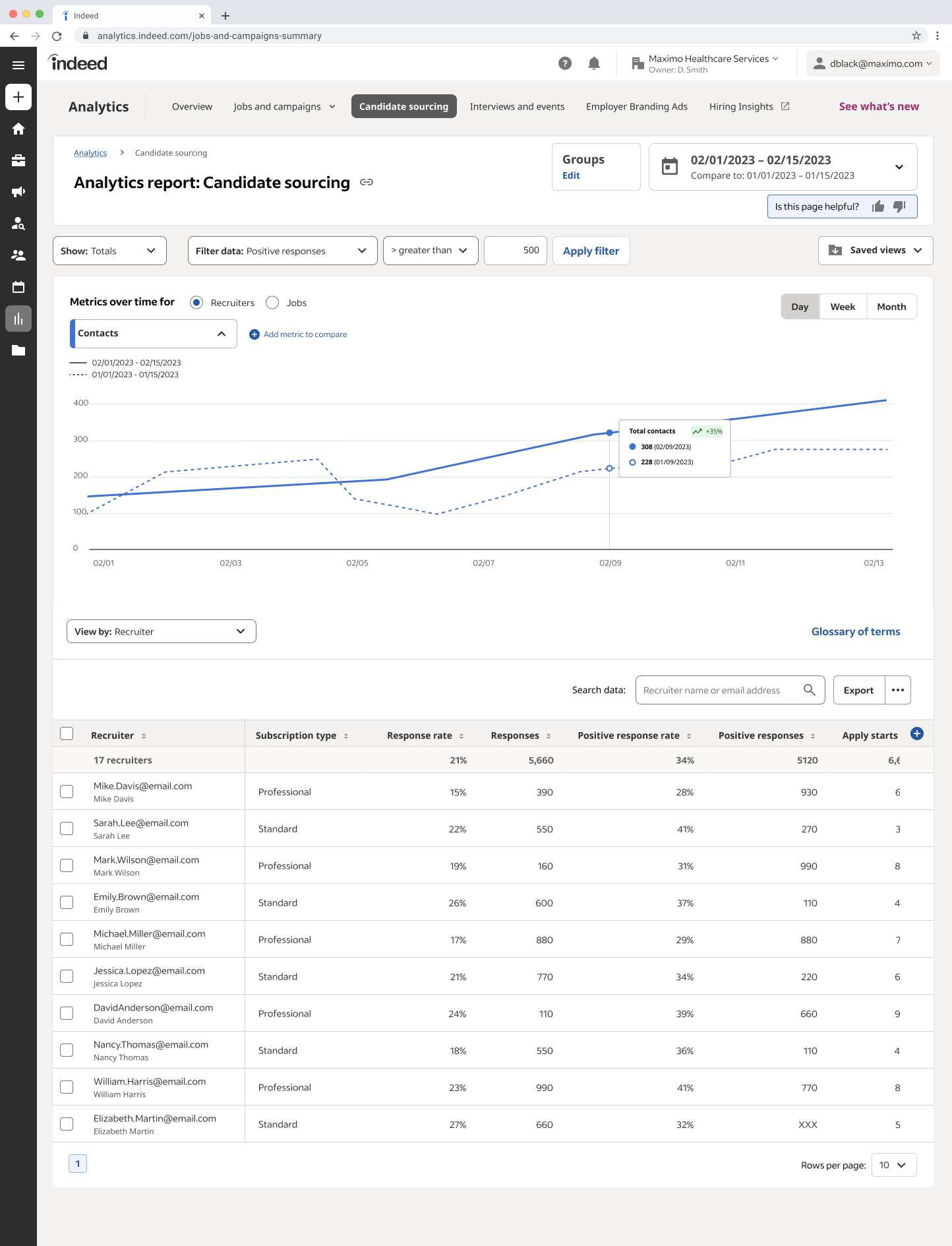
Old analytics experience
User testing
After several rounds of explorations with internal feedback from product and engineering, I collaborated closely with UX research to develop and execute a moderated user testing learning plan.
Objective
Test the Smart Sourcing MVP with external users to ensure we are meeting users’ needs and wants.
Methodology
Four In-depth interviews with US-based talent acquisition managers who have engaged with Indeed analytics within the calendar year.
Findings
Users needed more detailed data breakdowns (by job title, location, team, recruiter activity) and robust, customizable filtering options to enable targeted analysis.
Users needed actionable insights to help them understand performance drivers, identify areas for improvement, and optimize sourcing strategies.
Analyzing performance at the individual recruiter and team level is crucial for performance management, coaching, and identifying best practices.
Understanding performance in relation to team averages, Indeed averages, and competitor data is highly valued for context and goal setting.
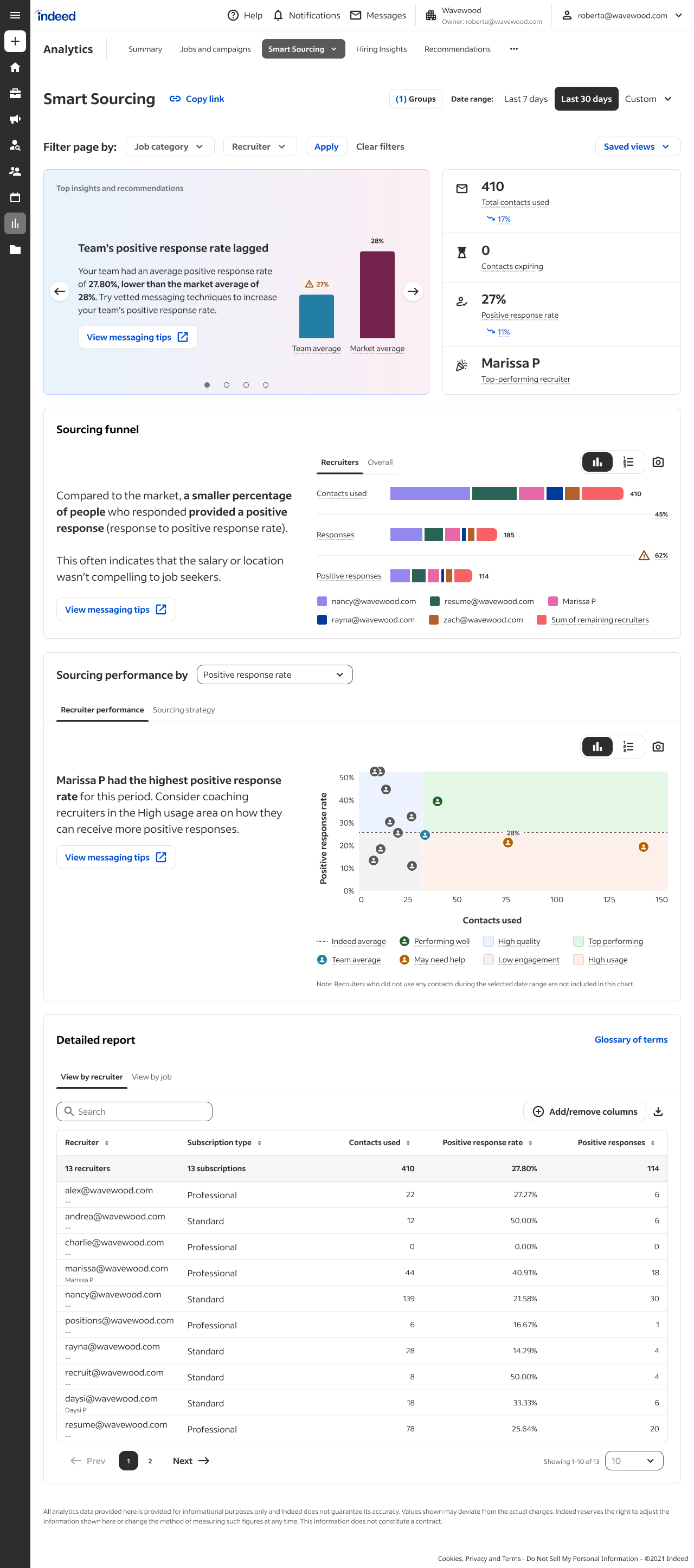
Design that was delivered
Next steps and debrief
Next steps
Users called out additional needs and desired features to be tackled in future iterations, including more customizable data filtering and a focus on actionable insights.
What went well
Through visioning workshops, user and stakeholder interviews, competitive analysis, multiple rounds of user testing and iteration, and through collaboration with product, engineering, and data stakeholders, I was able to design a useful, easy to use, and delightful new experience that was well-received by users and generated new revenue for the business.
What didn’t go well
Despite the high profile of this endeavor and the positive outcomes, my role was eliminated shortly after delivery, inhibiting fluid post-MVP iterations and impacting team momentum and morale.
Occasionally, tech constraints limited the scope of what we were able to deliver.